Placing a vending machine outside opens up high-traffic locations like transit hubs, parks, stadiums, and university courtyards. It also puts electrical and mechanical equipment directly in the path of rain, frost, UV radiation, and humidity. For outdoor vending operators, weather is a constant variable affecting revenue, equipment lifespan, product quality, and customer satisfaction at the same time. This guide covers exactly what each weather condition does to outdoor machines, why indoor placement is the stronger long-term decision, and how to limit damage when outdoor deployment is unavoidable.
The Honest Truth About Outdoor Vending
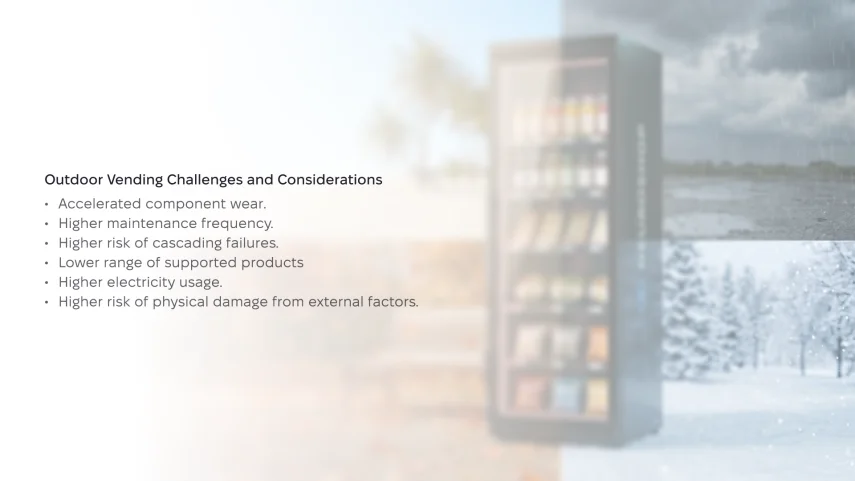
Before getting into specifics: outdoor vending is not ideal. Placing machines indoors, or at minimum in a covered and sheltered environment, is strongly recommended wherever possible.
Here is why it matters operationally:
- Accelerated component wear. A machine running reliably for 8 to 10 years indoors may need major servicing within 3 to 4 years outdoors.
- Higher maintenance frequency. Seals, payment hardware, circuit boards, and compressors all degrade faster under weather exposure.
- Cascading failures. One damaged seal leads to moisture ingress, which damages a payment board, which creates downtime across multiple customer visits before anyone notices.
- Direct product loss. Heat, frost, and humidity compromise product quality in ways that result in write-offs, not just customer complaints.
Running an indoor-grade machine outside is not a cost-saving decision. It is a way of paying for the same machine twice. Neuroshop’s AI micromarkets are built for indoor deployment with full climate control and real-time monitoring. If you are evaluating vending solutions and want to avoid these issues entirely, contact the Neuroshop team to find the right setup for your location.
Heat: What It Actually Costs You
High summer temperatures create two distinct problems: mechanical stress and product spoilage.
On the mechanical side:
- Cooling compressors work significantly harder as ambient temperature climbs. A unit fighting 38°C outside will run near-continuously, accelerating wear and raising electricity costs.
- UV exposure degrades plastic fascias, fades product labels, and weakens adhesive seals across a single season.
- Direct afternoon sun raises casing temperature well above ambient air. This compounds the load on every internal system.
On the product side:
- Temperature-sensitive items spoil faster when the cooling system is overloaded.
- Demand for cold beverages and refreshing items increases sharply in hot weather, meaning stockouts hit exactly when foot traffic is highest.
What to do:
- Position in shade. A wall, canopy, or permanent overhang during peak afternoon hours reduces compressor load measurably.
- Check compressors monthly in summer. Continuous running without cycling means the unit is already overloaded.
- Rotate stock seasonally. Swap out winter items for cold drinks, electrolyte products, and high-margin chilled snacks. See what products to sell in vending machines for a practical breakdown by location type.
- Use remote temperature monitoring to catch anomalies before product is compromised.
Rain and Humidity: The Long Game
Rain and elevated humidity infiltrate unprotected machines gradually. The damage accumulates quietly over months until it becomes a repair bill.
Most vulnerable components:
- Coin and bill validators. These rely on precise mechanical tolerances and electronic sensors that degrade with persistent moisture exposure.
- Payment terminals and touchscreens. These develop intermittent faults without properly sealed, IP-rated enclosures.
- Structural seams and ventilation gaps. These allow moisture into the cabinet, where condensation forms on circuit boards during day-to-night temperature swings.
- Snack machine packaging. This absorbs ambient humidity, leading to softened textures, early expiry, and returns.
What operators should do:
- Require IP34-rated machines as a minimum for any permanent outdoor deployment. This covers rain splash from any direction.
- Inspect all seals quarterly and after any major weather event.
- Check payment terminal waterproofing before and after wet seasons, not only during scheduled service visits.
- Use a covered canopy or roof overhang wherever possible to reduce direct rain contact.
If rain and humidity are already affecting your current setup, Neuroshop’s fridge vending machines and AI micromarkets are designed for indoor environments that eliminate these problems entirely.
Freezing Temperatures: Failures That Stop Revenue
Cold weather introduces immediate failure modes that heat does not.
What freezing does to machines:
- Products freeze solid. Packaging splits, carbonated drinks expand and burst, chocolate blooms and becomes unsellable.
- Metal components contract, affecting the precision of delivery coils and dispensing mechanisms.
- LCD screens and touchscreens become sluggish or unresponsive below 0°C.
- Cashless payment terminals stop functioning in hard frost.
- Condensation inside the cabinet freezes and expands, cracking boards or seals that were previously intact.
Most standard vending machines are not designed to handle freezing as a default condition. Heater kits and dual-mode HVAC systems are add-ons, and they should be treated as essential for any machine in a climate that drops below 0°C regularly.
Protection measures that make a real operational difference:
- Internal heater kits. These maintain core components above minimum operating temperature, typically around 5°C.
- Heated glass panels. These prevent condensation on display windows and keep the interface usable below zero.
- Windbreak placement. Anchoring machines near walls or barriers significantly reduces wind chill exposure.
- Winter product rotation. Shift to shelf-stable snacks, hot drink options, and items that maintain integrity at low temperatures.
Wind and Physical Exposure
Wind is less discussed than heat or rain, but its effects are consistent and cumulative.
The operational risks:
- Seal degradation. Persistent wind dries out gaskets and exterior seals faster than in sheltered environments.
- Debris ingress. Grit, sand, and leaves clog condenser coils and ventilation grilles, causing compressors to overheat and fail ahead of schedule.
- Physical vibration. Sustained wind movement loosens internal components and connectors over time.
- Tipping risk in storms. An unsecured machine on a hard surface can topple in storm-force wind, creating damage, liability exposure, and extended downtime.
What to do:
- Anchor to a concrete pad or fixed wall mount as standard practice, not an optional upgrade.
- Choose natural windbreak positions such as building corners, recessed entrances, and covered walkways.
- Clean condenser grilles monthly in exposed, coastal, or dusty environments.
- Inspect for loosened internal connectors during routine service visits at high-wind locations.
Put AI to work in your vending operation See how Neuroshop's demand forecasting, dynamic pricing, and real-time inventory tools can increase revenue at every location.
How Weather Changes What Sells
Weather directly shifts customer purchasing behaviour, and operators who plan for this consistently outperform those who do not.
Seasonal demand patterns:
- Hot weather. Cold beverages, water, electrolyte drinks, and refreshing snacks spike sharply. Stockouts are most costly here because foot traffic peaks at the same time.
- Cold weather. Demand moves toward hot beverages, comfort foods, high-calorie snacks, and shelf-stable products.
- Rainy days. Impulse purchases drop as fewer people linger near outdoor machines. Location and cover matter more on wet days than product mix does.
What operators do differently with live data:
- Rotate planograms seasonally, not on a fixed annual schedule.
- Track individual SKU velocity at each location using live sales data, not periodic restock visits.
- Use demand forecasting to flag fast-movers before they go empty, not after the slot has been dark for two days.
Neuroshop’s telemetry platform gives operators live visibility across every device, covering stock levels, sales performance, and restock alerts from a single dashboard. For a deeper look at how AI drives these results, see how AI optimizes vending machine sales.
Maintenance: Consistency Pays More Than Reactive Fixes
A structured monthly inspection covering seals, ventilation, payment hardware, and exterior condition catches problems when they are inexpensive to fix. During winter months, checking for salt or sand buildup on exterior components and clearing ventilation grilles prevents secondary failures that compound the original weather exposure. For a broader overview of building a resilient vending operation, the Neuroshop guide on starting a vending machine business covers equipment selection, location planning, and operational setup in detail.
Monthly maintenance checklist for outdoor machines:
- Inspect all exterior seals and gaskets for cracking or compression loss.
- Clear condenser and ventilation grilles of dust, leaves, or debris.
- Check payment terminal waterproofing and screen responsiveness.
- Review remote monitoring dashboard for temperature or power anomalies.
- Test delivery mechanisms for any cold-weather stiffness or misalignment.
Conclusion
Weather affects every layer of outdoor vending, from compressor lifespan and payment hardware reliability to product integrity and seasonal demand patterns. Operators who perform best treat weather as a planning variable: choosing rated equipment, positioning it with care, rotating stock seasonally, and maintaining it on a consistent schedule. Indoor placement remains the stronger long-term decision by a significant margin. For operators ready to move past reactive outdoor vending, Neuroshop’s AI micromarkets and real-time monitoring platform provide the operational foundation to do it properly. Reach out to the Neuroshop team to discuss what the right setup looks like for your locations.
FAQ
Can vending machines be left outside all year round? Yes, but only if built for outdoor use with IP-rated weatherproof construction and heater kit compatibility. Standard indoor machines degrade quickly when exposed to rain, humidity, and temperature extremes, typically requiring major servicing within a few years rather than the 8 to 10 year lifespan expected in a climate-controlled environment.
What temperature range can outdoor vending machines handle? Weather-rated outdoor machines typically operate between -20°C and +50°C when equipped with heating and cooling systems. Without a heater kit, most standard machines begin failing below 0°C, with frozen product, unresponsive payment terminals, and compressor shutdowns that halt revenue until a service visit.
Does rain damage vending machine payment systems? Unprotected payment terminals are highly vulnerable to sustained rain and humidity. Moisture causes corrosion on electronic components and precision sensors over time. Outdoor machines require fully sealed, IP-rated payment hardware, and operators should check terminal seals regularly, especially after heavy rainfall or extended wet periods.
How does hot weather affect vending machine electricity costs? In summer, cooling compressors work significantly harder against high ambient heat, increasing electricity consumption measurably. Direct sun exposure compounds this. Positioning machines in shade, ideally near a building overhang, reduces compressor load and lowers operating costs throughout peak summer months.
What products sell best in outdoor vending machines during summer vs. winter? Cold beverages, electrolyte drinks, and refreshing snacks outperform in summer. In winter, demand shifts toward shelf-stable snacks, hot drinks, and comfort-oriented products. Operators rotating stock seasonally based on live sales data consistently outperform those running fixed planograms year-round.

