Кражи и вандализм — это операционные риски, с которыми рано или поздно сталкивается каждый оператор вендинговых аппаратов. Разбитый монетоприёмник, взломанная дверь или исчезнувший товар между пополнениями — каждый такой инцидент обходится деньгами и временем. Большинство нападений носят оппортунистический характер, а значит, структурированный подход к профилактике существенно снижает уязвимость. Это руководство охватывает физическое укрепление, интеллектуальный мониторинг, управление наличными и реагирование на инциденты — с практическими шагами на каждом этапе.
Почему вендинговые аппараты становятся мишенью
Большинство краж из вендинговых аппаратов делится на две категории: кража наличных и кража товара. Вандализм чаще всего является либо неудавшейся попыткой кражи, либо намеренным повреждением имущества. Распространённые мотивы включают:
- Кассеты с наличными на виду и известно, что в них хранится дневная выручка
- Аппараты в малолюдных или плохо освещённых местах предоставляют злоумышленникам прикрытие
- Наружные или полупубличные аппараты доступны вне рабочего времени персонала
- Аппараты без видимых средств защиты сигнализируют о низком сопротивлении
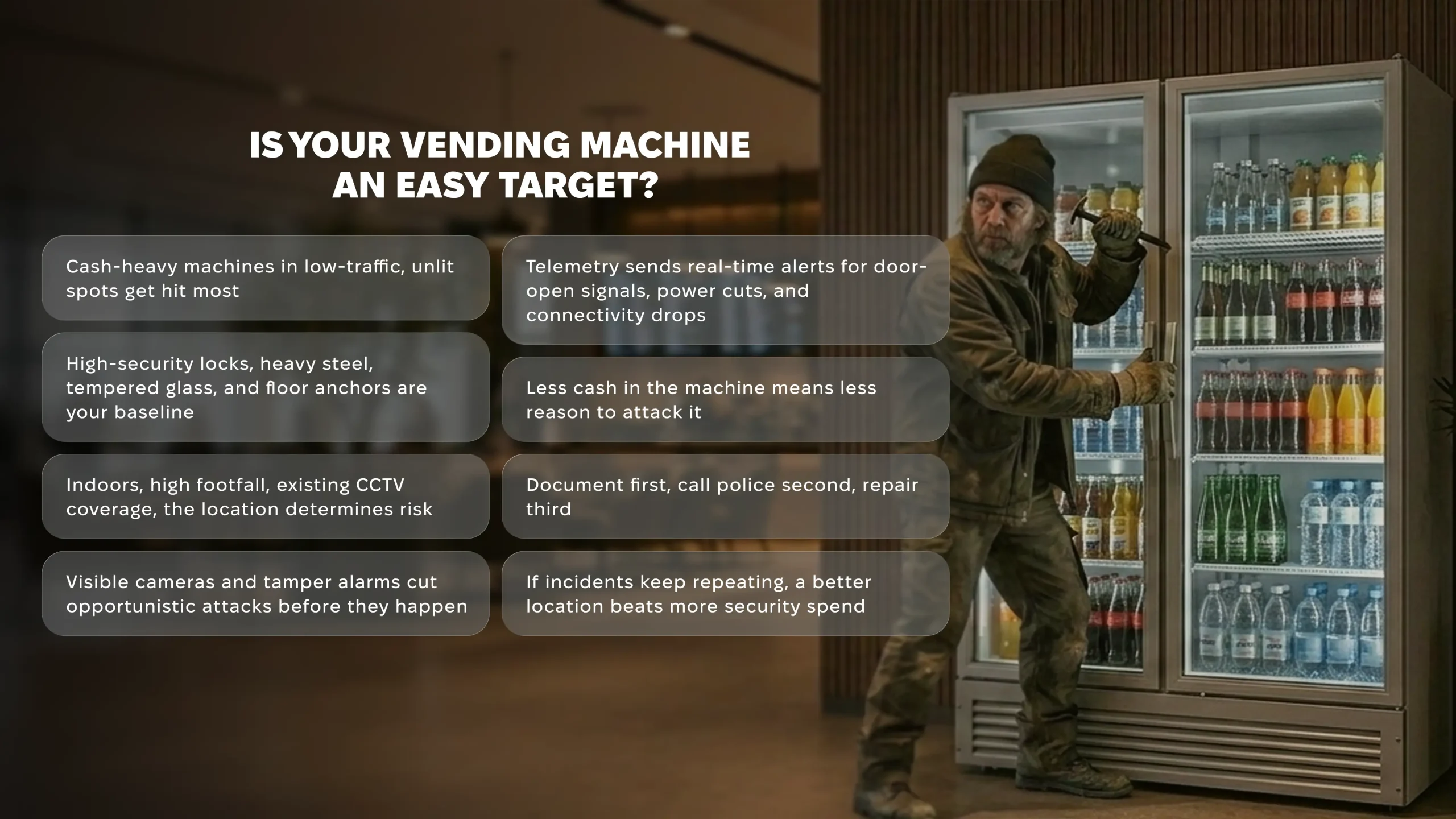
Аппараты, которые подвергаются нападениям снова и снова, как правило, имеют одинаковый профиль: изолированное размещение, работа преимущественно с наличными, отсутствие видимых камер и редкие визиты оператора. Устранение даже одного из этих факторов снижает риск. Устранение всех делает ваш аппарат неудобной целью.
Физическая безопасность: первая линия обороны
Укрепление самого аппарата
Физическая целостность аппарата — ваша отправная точка. Дешёвые аппараты от неизвестных производителей нередко оснащены простыми кулачковыми замками и тонкой сталью, которые можно обойти за считаные минуты. При оценке аппаратов обратите внимание на следующее:
- Качество замков — Замки повышенной безопасности с ограниченным тиражированием ключей значительно лучше противостоят взлому и сверлению, чем стандартная фурнитура.
- Толщина стали корпуса — Более тяжёлая сталь дольше сопротивляется взлому, давая время для срабатывания сигнализации.
- Тип стекла или панели — Ламинированное или закалённое стекло значительно лучше выдерживает удары, чем стандартные акриловые панели.
- Точки крепления — Напольные болты и настенные кронштейны предотвращают опрокидывание и перемещение. Аппарат, который нельзя сдвинуть с места, нельзя и загрузить в фургон.
Холодильные вендинговые аппараты Neuroshop серийно выпускаются с усиленными корпусами и защищёнными от несанкционированного доступа механизмами, что с самого начала исключает одну категорию затрат на модернизацию.
Стратегическое размещение
Место установки аппарата не менее важно, чем его конструкция. Профиль безопасности локации определяется несколькими измеримыми факторами:
| Фактор размещения | Меньший риск | Больший риск |
|---|---|---|
| Освещение | Яркое, равномерное | Тусклое или отсутствующее |
| Видимость | Открытое, контролируемое место | Угол, ниша, слепое пятно |
| Часы доступа | Только в рабочее время персонала | Круглосуточный публичный доступ |
| Пешеходный трафик | Высокий и стабильный | Низкий или переменный |
| Покрытие видеонаблюдения | Существующие камеры поблизости | Отсутствие наблюдения |
Размещение внутри офисных зданий, на заводах, в спортзалах и транспортных узлах значительно сокращает окно возможностей для злоумышленников. Если наружное размещение неизбежно, выбирайте локации, охваченные существующей системой видеонаблюдения здания, с высоким естественным пешеходным трафиком в ночное время.
Технологии сдерживания и обнаружения угроз
Камеры и сигнализация
Видимая камера видеонаблюдения — одно из наиболее экономически эффективных средств сдерживания. Ключевое слово здесь — видимая: само наличие камеры меняет поведение ещё до того, как произойдёт какой-либо инцидент. Для максимального эффекта:
- Размещайте камеры так, чтобы они охватывали и фронтальную панель аппарата, и прилегающую территорию
- Используйте модели с функцией ночного видения для круглосуточного покрытия
- Рассмотрите возможность установки освещения с датчиком движения рядом с камерами
- Даже муляж камеры в сочетании с наклейкой о сигнализации отпугивает оппортунистических злоумышленников
Датчики вскрытия, отправляющие оповещения в реальном времени на ваш телефон, добавляют активный уровень реагирования. Когда сигнализация срабатывает во время нападения, шансы на успешный взлом резко снижаются.
Дистанционный мониторинг и телеметрия
Интеллектуальные вендинговые технологии изменили то, что операторы могут обнаруживать и насколько быстро. Телеметрическая платформа Neuroshop обеспечивает мониторинг состояния аппарата в режиме реального времени: нетипичные события — неожиданное открытие дверцы, перебои в электропитании или потеря связи — немедленно вызывают тревогу. Без телеметрии инциденты остаются незамеченными вплоть до следующего планового визита.
Технология компьютерного зрения идёт ещё дальше, обеспечивая мониторинг взаимодействий с аппаратом на основе искусственного интеллекта. Операторы получают активные оповещения, когда поведение вблизи аппарата выходит за рамки нормальных паттернов — это существенно ускоряет реагирование на проблемы в местах повышенного риска.
Управляете продовольственными вендинговыми аппаратами по всей Европе?
AI-аппараты Neuroshop формируют документацию соответствия, которую требуют проверяющие органы.
Снижение финансовой привлекательности аппаратов
Переход на безналичный расчёт или минимизация наличных
Уменьшение суммы наличных в аппарате — наиболее прямой способ снизить риск кражи. Эффективные стратегии включают:
- Стимулируйте безналичную оплату — карты, бесконтактные и мобильные платежи сокращают физическую наличность, не влияя на продажи. На большинстве европейских рынков безналичная оплата уже является предпочтительным способом расчётов для покупателей.
- Снизьте максимальный лимит наличных — настройте аппараты на хранение меньшего максимального остатка в кассе.
- Варьируйте расписание инкассаций — непредсказуемое время сбора наличных не позволяет преступникам приурочивать нападения к пиковому накоплению средств.
- Проводите частые инкассации — ежедневный или через день сбор наличных в высокооборотных точках ограничивает потенциальные потери за один инцидент.
Операторы, работающие с AI-микромаркетами Neuroshop, по умолчанию располагают интегрированной инфраструктурой безналичных платежей, что полностью устраняет мотив кражи наличных на объектах с высокой проходимостью.
Замена замков на аппаратах б/у
Если вы приобретаете подержанные аппараты, немедленно замените все замки. Невозможно знать, сколько копий оригинальных ключей существует и в чьих они руках. То же самое относится к ситуациям, когда сотрудник, имевший доступ к аппаратам, покидает вашу компанию: смените все замки, к которым он имел доступ, ещё до его ухода.
Выстраивание отношений на точках размещения
Операторы, которые уделяют пять минут разговору с персоналом объекта при каждом сервисном визите — интересуясь, что хорошо продаётся, что им нравится, не замечали ли они чего-нибудь необычного, — формируют неформальный человеческий надзор вокруг своих аппаратов. Это уровень безопасности, не требующий никаких затрат на обслуживание.
Персонал, который знает вас по имени, с большей вероятностью сообщит о подозрительном поведении, предупредит руководство, если кто-то слоняется рядом с аппаратом, и будет чувствовать определённую ответственность за его состояние. Никакое физическое оборудование не обеспечит такого результата.
Что делать после кражи или акта вандализма
Даже при наличии надёжной системы профилактики инциденты случаются. Чёткий протокол реагирования обеспечивает более быстрое восстановление и лучшие страховые результаты.
Немедленные действия
- Задокументируйте всё, прежде чем что-либо трогать — сфотографируйте повреждения с разных ракурсов, включая крупные планы места взлома и любых оставшихся улик.
- Сообщите в местную полицию — подайте заявление и получите номер дела, даже если шансы на возмещение ущерба кажутся невысокими. Он понадобится для страховой компании.
- Уведомьте владельца объекта — у него могут быть записи видеонаблюдения или свидетели, и он должен узнать об инциденте незамедлительно.
- Просмотрите журналы дистанционного мониторинга — данные телеметрии позволяют установить точное время инцидента и выявить закономерности.
- Оцените ущерб и выполните ремонт — быстрое восстановление работоспособности ограничивает общие потери. Длительный простой увеличивает затраты.
Страховые претензии
Качественная документация об инциденте — это то, что отличает выплаченную претензию от оспариваемой. Ведите стандартное досье для каждого аппарата, включающее:
- Квитанцию о покупке и первоначальную стоимость
- Затраты на модернизацию или модификации
- Журнал предыдущих инцидентов и расходов на ремонт
- Датированные фотографии аппарата в нормальном состоянии
При подаче претензии приложите номер дела из полиции, фотодокументацию, сметы на ремонт от квалифицированного техника и ваш журнал инцидентов. Частые претензии по одному аппарату могут повлиять на ваши страховые премии или условия покрытия. Если локация постоянно создаёт проблемы, перемещение аппарата может оказаться более практичным долгосрочным решением.
Пересмотр стратегии размещения
Иногда правильный ответ на повторяющиеся инциденты — это лучшая локация, а не увеличение расходов на безопасность. Если аппарат требует защитной клетки, непрерывного видеонаблюдения и частой смены замков лишь для того, чтобы оставаться в рабочем состоянии, — экономика этой точки работает против вас.
Используйте данные о продажах для моделирования реальной чистой позиции на проблемных локациях. Руководство Neuroshop по использованию данных продаж вендинговых аппаратов для принятия бизнес-решений подробно объясняет, как провести такой анализ. Аппарат, перемещённый в более безопасное и прибыльное место, покажет лучшие результаты, чем тот, что остаётся на хронически сложной точке даже после инвестиций в безопасность.
Тщательная оценка локации перед размещением — включая реалистичную оценку рисков безопасности — обходится значительно дешевле, чем исправление ситуации задним числом. Руководство Neuroshop об ошибках новых операторов вендинга подробно рассматривает наиболее распространённые ошибки при выборе локации.
Управляете продовольственными вендинговыми аппаратами по всей Европе?
AI-аппараты Neuroshop формируют документацию соответствия, которую требуют проверяющие органы.
Заключение
Кражи и вандализм в вендинговом бизнесе — управляемые риски, а не неизбежные издержки. Операторы, несущие наименьшие потери, относятся к безопасности как к системе: физическое укрепление, интеллектуальный мониторинг, безналичная оплата, отношения с персоналом точек и честная оценка локации — всё это работает в комплексе. Реагирование на инциденты и страхование завершают картину. Один предотвращённый взлом, как правило, покрывает стоимость более качественных замков, камеры и подписки на телеметрию — а защита со временем только усиливается.
Часто задаваемые вопросы
Какой наиболее эффективный способ предотвратить кражу из вендингового аппарата? Наиболее эффективный подход сочетает несколько уровней: хорошо освещённая внутренняя локация с высоким трафиком; качественные замки и крепление к полу; видимые камеры; безналичная оплата для снижения суммы наличных в аппарате. Ни одна отдельная мера не является столь же эффективной, как сочетание всех четырёх.
Стоит ли устанавливать защитную клетку вокруг вендингового аппарата? Защитные клетки обеспечивают надёжную физическую защиту в наружных локациях с очень высоким уровнем риска, однако могут снижать доступность для покупателей и замедлять пополнение товара. Они лучше всего подходят для точек с задокументированной историей взломов и круглосуточным публичным доступом, где другие средства сдерживания уже оказались недостаточными.
Как подать страховую претензию за вандализм в отношении вендингового аппарата? Подайте заявление в полицию и получите номер дела, затем задокументируйте все повреждения фотографиями до начала ремонта. Передайте страховщику номер дела, фотографии, датированные сметы от квалифицированного техника и документы о покупке аппарата. Большинство полисов требуют уведомления в течение 24–48 часов с момента обнаружения инцидента.
Действительно ли безналичные платежи снижают риск кражи? Да. Наличные деньги — главный мотив кражи при большинстве взломов вендинговых аппаратов. Аппараты, работающие полностью в безналичном режиме, содержат минимум наличных или не содержат их вовсе, что устраняет основной финансовый стимул для нападения. Безналичная оплата также является предпочтительным способом расчётов для покупателей на большинстве европейских рынков, поэтому операционное изменение не влечёт потерь в продажах.
Какие данные телеметрии или мониторинга наиболее полезны после инцидента? Журналы событий открытия дверцы, временны́е метки перебоев в электропитании, записи о потере связи и журналы транзакций являются наиболее информативными. В совокупности они позволяют установить точное время и характер инцидента, что подтверждает как страховую претензию, так и любое расследование правоохранительных органов.

