Weight is one of the most underestimated factors when planning a vending machine installation. Choose the wrong floor, skip the structural check, or underestimate transport requirements, and a straightforward placement turns into a costly delay. Whether you are installing a snack machine in an office corridor, a refrigerated unit in a factory canteen, or a full AI micromarket in a logistics hub, knowing what your machine weighs, empty and fully loaded, determines your site survey, delivery logistics, and installation approach.
How Heavy Is a Vending Machine? Weight by Type
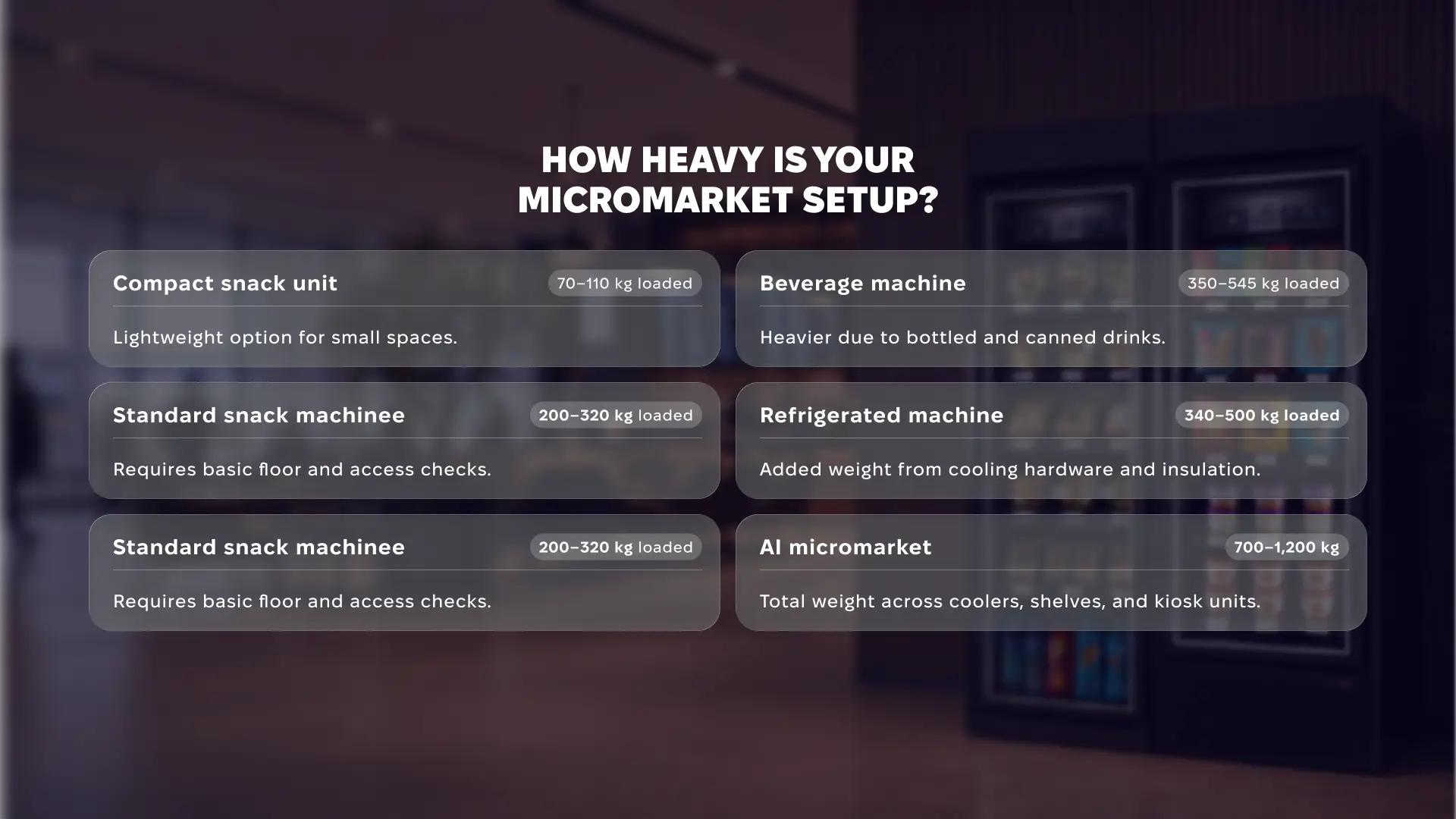
Standard vending machines range from around 180 kg to over 500 kg when fully stocked, depending on type, build, and capacity. The spread is wide because machines serve very different use cases. A compact countertop unit is engineered to entirely different specifications than a triple-door refrigerated combination machine.
Here is a practical reference across the most common vending machine types:
| Machine Type | Empty Weight | Fully Loaded |
|---|---|---|
| Countertop / compact snack | 45–90 kg | 70–110 kg |
| Standard snack machine | 180–270 kg | 200–320 kg |
| Standard beverage machine | 270–410 kg | 350–545 kg |
| Combination snack + drink | 320–450 kg | 380–545 kg |
| Refrigerated fridge vending machine | 280–400 kg | 340–500 kg |
| Frozen vending machine | 320–500 kg | 400–545 kg |
| AI micromarket cooler unit | 150–300 kg | 200–400 kg |
These figures cover standard configurations. Exact weight depends on manufacturer, steel gauge, glass panel dimensions, and installed hardware. Always request the technical data sheet from your supplier before finalising a site.
What Makes a Vending Machine So Heavy?
Most of a machine’s weight comes from its structural components, not the products inside. Understanding the sources helps you anticipate which categories will put the most stress on your floor.
Primary weight contributors:
- Steel cabinet frame: Heavy-gauge steel dominates full-size machines. It provides security, anti-tip stability, and resistance to impact and tampering.
- Refrigeration compressor and insulation: Refrigerated machines carry a compressor plus thick insulation throughout the cabinet. This alone can add 40–80 kg compared to a dry snack machine of similar dimensions.
- Glass display panels: Full-width glass fronts on fridge vending machines add structural weight while allowing customers to browse without opening the door.
- Payment and technology hardware: Card readers, touchscreens, AI cameras, and telemetry modules contribute marginally to weight but are worth noting on precision floor load calculations.
- Loaded product inventory: Beverages are the heaviest inventory category. A fully stocked beverage machine can carry 90–230 kg of product on top of its empty weight.
Refrigeration is the single biggest weight variable. A fridge or frozen machine of the same external dimensions as a dry snack unit will be substantially heavier, even before a single product goes inside.
Micro Market Weight: A Different Calculation
A micro market installation is a system of components, not a single machine. Weight planning for a Neuroshop AI micromarket needs to account for each unit individually and their combined floor load across the zone.
Typical micro market component weights (loaded):
- Open shelf gondola: 50–120 kg per unit
- Refrigerated cooler unit: 200–400 kg
- Self-checkout kiosk: 30–80 kg
- Frozen unit, if included: 300–500 kg
A mid-size micro market covering 15–25 square metres typically carries a combined loaded weight of 700–1,200 kg. Weight is distributed across several footprint points, which changes the structural calculation compared to a single machine placement.
Neuroshop’s team works with operators to configure each micromarket to the specific dimensions and floor constraints of the site. Full weight specifications, footprint data, and power requirements are provided before delivery, so structural checks can be completed well in advance.
Running food vending machines or micromarkets across Europe?
Neuroshop's AI vending machines automatically log the compliance records your site inspections require.
Floor Load Capacity: What to Check Before Installation
Floor load capacity is the most important structural question before any placement. Getting it wrong risks floor damage, building code violations, and liability if an incident occurs.
Before any machine is delivered, work through this checklist:
- Identify your floor construction type. Concrete slabs have higher load tolerances than timber-framed floors. Commercial buildings constructed before 1980 may carry lower load ratings than modern construction.
- Get the machine’s empty and loaded weight. Request the manufacturer’s technical data sheet and use the fully loaded figure for all structural calculations.
- Calculate load per unit area. Divide total machine weight by its footprint area to get the point load per square centimetre. Compare this against the floor’s rated capacity.
- Consult the facilities manager or a structural engineer. In commercial buildings, the FM should have floor load ratings on file. For older buildings or upper-floor placements, an independent structural check is worthwhile.
- Assess the floor surface. Hard, level surfaces such as concrete, tile, and commercial vinyl are suitable. Carpet concentrates load on the pile and reduces stability. Uneven floors create tipping risk over time.
- Plan the full delivery route. Corridor floors, lifts, and ramps may face higher point loads during transit. A 300 kg machine on a two-wheel sack truck concentrates its weight on a narrow contact patch.
Upper-floor placements in older commercial buildings are the highest-risk scenario. If there is any doubt, commission a structural survey before committing to the location.
Frozen Vending Machines: The Heaviest Category
Frozen vending machines are the heaviest format in most operators’ fleets. The combination of heavy-gauge insulation, a powerful compressor unit, and dense frozen product inventory creates a machine that routinely exceeds 400 kg when loaded.
Key installation considerations for frozen units
- Power supply must support a dedicated circuit, as compressor start-up draws significant surge current
- Most manufacturers specify at least 15 cm of ventilation clearance on each side and at the rear
- Floor load requirements exceed those of standard refrigerated machines
- Levelling is critical: an unlevel frozen unit stresses the compressor unevenly and reduces its service life
If you are placing frozen machines across multiple sites, factor transit weight into vehicle payload planning. Removing inventory before transport reduces load and minimises tipping risk during transit.
Moving a Vending Machine: Equipment Matched to Weight
Moving a vending machine safely requires equipment matched to its actual weight. Improvised moves with undersized equipment account for a significant share of machine damage during relocation.
Recommended handling equipment by weight band:
- Machines under 150 kg: heavy-duty sack truck with safety straps
- Machines 150–300 kg: pallet jack or powered stair climber
- Machines above 300 kg: pallet truck with a minimum two-person crew, or a specialist vending delivery service
- Upper-floor placements: freight lift rated above the machine’s loaded weight, or specialist rigging for stairwell access
Always empty the machine fully before moving. Removing inventory from a 450 kg loaded refrigerated unit can reduce transit weight by 100–150 kg and significantly reduces tipping risk on the truck.
Thinking about upgrading your vending fleet across Europe?
Neuroshop helps operators plan and deploy AI vending machines across every site on their route.
Do Smart Features Add to Vending Machine Weight?
AI vending technology, including computer vision cameras, telemetry modules, and digital touchscreens, adds minimal weight relative to the machine’s total mass. Expect an addition of 2–8 kg for a full AI hardware package on a standard refrigerated machine.
The more significant consideration with AI-equipped machines is installation complexity. Neuroshop’s computer vision platform requires camera placement, screen mounting, and network connectivity. None of these affect floor load, but all affect site preparation time.
Operators managing machines across multiple European sites benefit from vending telemetry that reduces unnecessary service visits. A machine that sends a low-stock alert is a machine you service when it needs it, not on a speculative schedule, which reduces how often equipment is moved around heavy units on your route.
Operators sourcing vending equipment through Neuroshop receive full technical data sheets for every machine type, covering empty and loaded weights, footprint dimensions, power requirements, and ventilation clearances. The team works with operators across Europe to match the right machine format to each site, whether that is a fridge vending machine for a chilled food location, a frozen unit for an ice cream deployment, or a multi-unit AI micromarket setup.
Vending Machine Weight: Key Takeaways
Vending machine weight ranges from under 100 kg for compact countertop units to over 500 kg for fully loaded refrigerated and frozen machines. Before installation, verify floor load capacity, plan the full delivery route, and confirm power and ventilation requirements. Weight affects site suitability, safety, and long-term machine performance. Getting this right before the machine arrives prevents expensive problems during and after installation.
Frequently Asked Questions
How much does a standard vending machine weigh in kg?
A standard full-size vending machine weighs between 180 and 410 kg when empty, depending on type. Refrigerated and frozen models sit at the upper end of that range. Always add loaded product weight, up to 230 kg extra, when calculating floor load requirements for a site.
How much does a fridge vending machine weigh?
Refrigerated fridge vending machines typically weigh between 280 and 400 kg empty. When fully stocked with chilled beverages or fresh food, total weight can reach 340 to 500 kg. The compressor unit and insulation lining account for the majority of the additional weight compared to a dry snack machine.
Can a standard office floor support a vending machine?
Most modern commercial concrete floors support vending machines without issue. Older buildings, timber-framed floors, and upper-storey placements should be assessed against their rated floor load before installation. The building’s facilities manager or an independent structural engineer can confirm suitability.
How much does a micro market weigh compared to a single vending machine?
A micro market is a system of individual units: coolers, open shelving, and self-checkout kiosks. Combined loaded weight for a mid-size installation typically falls between 700 and 1,200 kg, distributed across multiple footprint points.
What equipment do I need to move a vending machine safely?
Machines under 150 kg can be moved with a heavy-duty sack truck. Machines between 150 and 300 kg require a pallet jack or powered stair climber. Anything above 300 kg needs a professional two-person crew with appropriate freight lift access for upper-floor moves.

