How much does a vending machine make a month? That depends heavily on location, product mix, and how well the machine is managed. Most operators find that income from individual machines varies widely:
- Low-performing machines in poor locations: $100–$200 per month
- Average machines in decent locations: $300–$600 per month
- High-performing machines in premium, high-traffic spots: $1,000–$1,500+ per month
Some companies claim you can earn over $100 an hour part-time with just a few machines. That figure is achievable, but it takes time, the right locations, and a managed fleet.
This reality aligns with the Pareto Principle, which states that roughly 80% of outcomes come from 20% of causes. In vending, about 20% of your machines will generate 80% of your profits. Some units will underperform while a handful drive the bulk of revenue. Building a fleet large enough for that top tier to matter is what determines long-term income.
Building a Profitable Vending Business
To make good money from vending with Neuroshop’s AI micromarkets, the focus needs to be on long-term network building. Placing a couple of machines and waiting for results is not a strategy. What actually works:
- Build across locations — schools, offices, hospitals, and gyms each behave differently and reward a diversified approach
- Test products and pricing — what sells in one location often fails in another
- Move underperformers — a machine earning $80/month in one spot may earn $500 in another
- Review regularly — consistent monitoring is what separates growing operators from stagnant ones
Data and Software Help Your Business
Every active machine generates daily data on which products sell best, which locations are most profitable, and when to restock. Tracking this manually across many locations breaks down fast. Vending management software (VMS) centralizes that data so decisions on restocking, pricing, and location changes are based on real numbers.
Key operational advantages include:
- Real-time sales and inventory visibility across your entire fleet
- Optimized restocking schedules that eliminate unnecessary trips
- Faster identification of slow-selling products before they drain margin
- Reduced waste across high-volume locations
Neuroshop’s telemetry system monitors equipment health in real time, flags anomalies before they cause failures, and manages temperature or power remotely. Combined with AI micromarkets that handle checkout automatically via computer vision, with no queues and no staff required, operators spend less time on manual tasks and more time on decisions that grow the business.
Put AI to work in your vending operation
See how Neuroshop's demand forecasting, dynamic pricing, and real-time inventory tools can increase revenue at every location.
What Does It Really Take to Make $100+ Per Hour?
Reaching that level of profit with traditional machines typically requires a fleet of 75–100 units. Managing that many requires consistent stocking, maintenance, and location scouting, which makes it a full logistics operation.
Based on Neuroshop’s experience, around 15 AI micromarkets in the right locations can achieve $100/hour in profit. Higher throughput per unit and automated checkout reduce the labor overhead that cuts into margin on conventional machines. The variables that determine whether you get there:
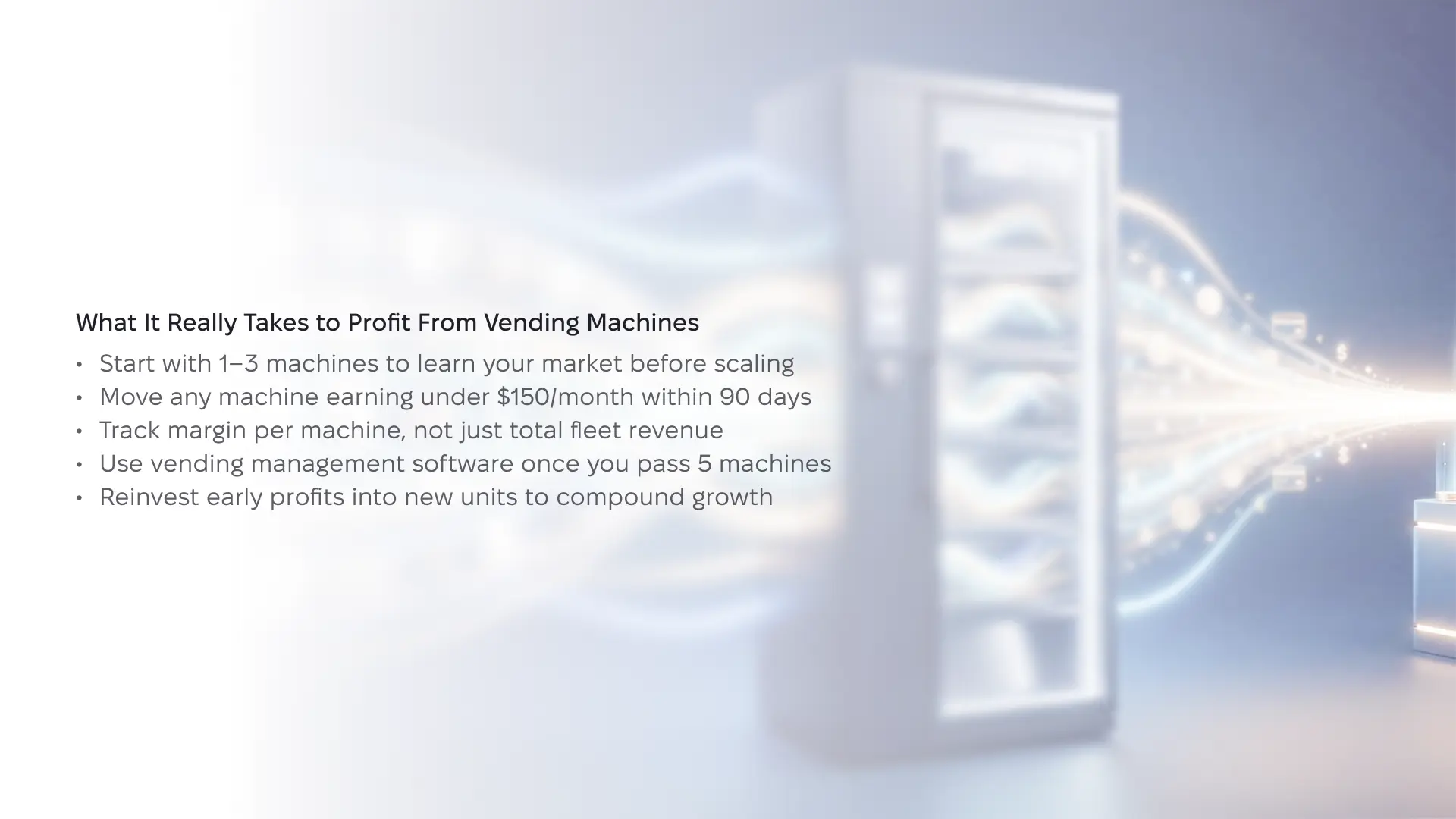
- Starting small, learning the market, then reinvesting profits into new units
- Securing locations with captive audiences, such as urgent care clinics, 24-hour facilities, and large office campuses
- Using route efficiency tools to service more machines per hour as the fleet grows
- Relocating consistently underperforming units on a defined schedule
Vending Is a Business of Numbers
The more machines you own, the more money you can make, though that also means more operational discipline is required. Each machine should function as an asset, something that generates income whether or not you are present, as Robert Kiyosaki defines the concept in Rich Dad, Poor Dad. Every unit added should pull its weight. A bad location costs time and capital, so cutting it early preserves both for something better.
Operators managing 20+ machines often report six-figure annual earnings. For practical guidance on scaling automated retail operations, the Neuroshop blog covers topics from AI retail trends to location strategy.
Smart Growth and Patience
Building a successful vending business is a long-term project. It requires patience, dedication, and considered investments. The operators who do well choose locations methodically, track margin per machine rather than just total revenue, and use automated tools to reduce manual workload as the fleet scales.
The payoff is tangible: flexible hours, remote management capability, and an income stream that compounds as new machines come online. Well-placed machines in optimal locations typically recoup their full investment within 18 months.
Conclusion
Building a vending machine business that generates serious income takes multiple machines, strong locations, smart product choices, and ongoing management. Automated tools like Neuroshop’s AI micromarkets lower the unit count needed to hit meaningful profit targets and reduce the operational overhead of running each one. Build step by step, treat every unit as a financial asset to be optimized, and use the best available technology to stay ahead.
FAQ
How much does a vending machine make a month? Most machines earn between $300 and $1,500 per month, depending on location and product mix. Hospitals, office buildings, and schools with consistent daily demand tend to sit at the higher end of that range.
How much does the average vending machine make per month? The average sits around $300 per month across all location types. The Pareto Principle applies directly here: a small share of well-placed machines drives the majority of total revenue across any fleet, so averages tend to underrepresent what top performers actually earn.
How much profit does a vending machine make a month? After cost of goods, location fees, and maintenance, net profit per machine typically falls between $100 and $300 per month. AI micromarkets with automated checkout can improve those margins by reducing labor costs and improving inventory turnover.
How many vending machines do you need to make a full-time income? With traditional machines averaging $500/month in profit, around 10 well-placed units generate $5,000 per month. With AI-powered micromarkets like Neuroshop’s, fewer units are needed to reach the same target due to higher per-machine output and lower operating costs.
Are vending machines a profitable business in 2025? Yes. U.S. vending operators generated roughly $7.7 billion in revenue in 2025. Profitability depends on location quality, product mix, and operational discipline. Operators using modern management tools consistently outperform those relying on manual tracking and reactive decision-making.

