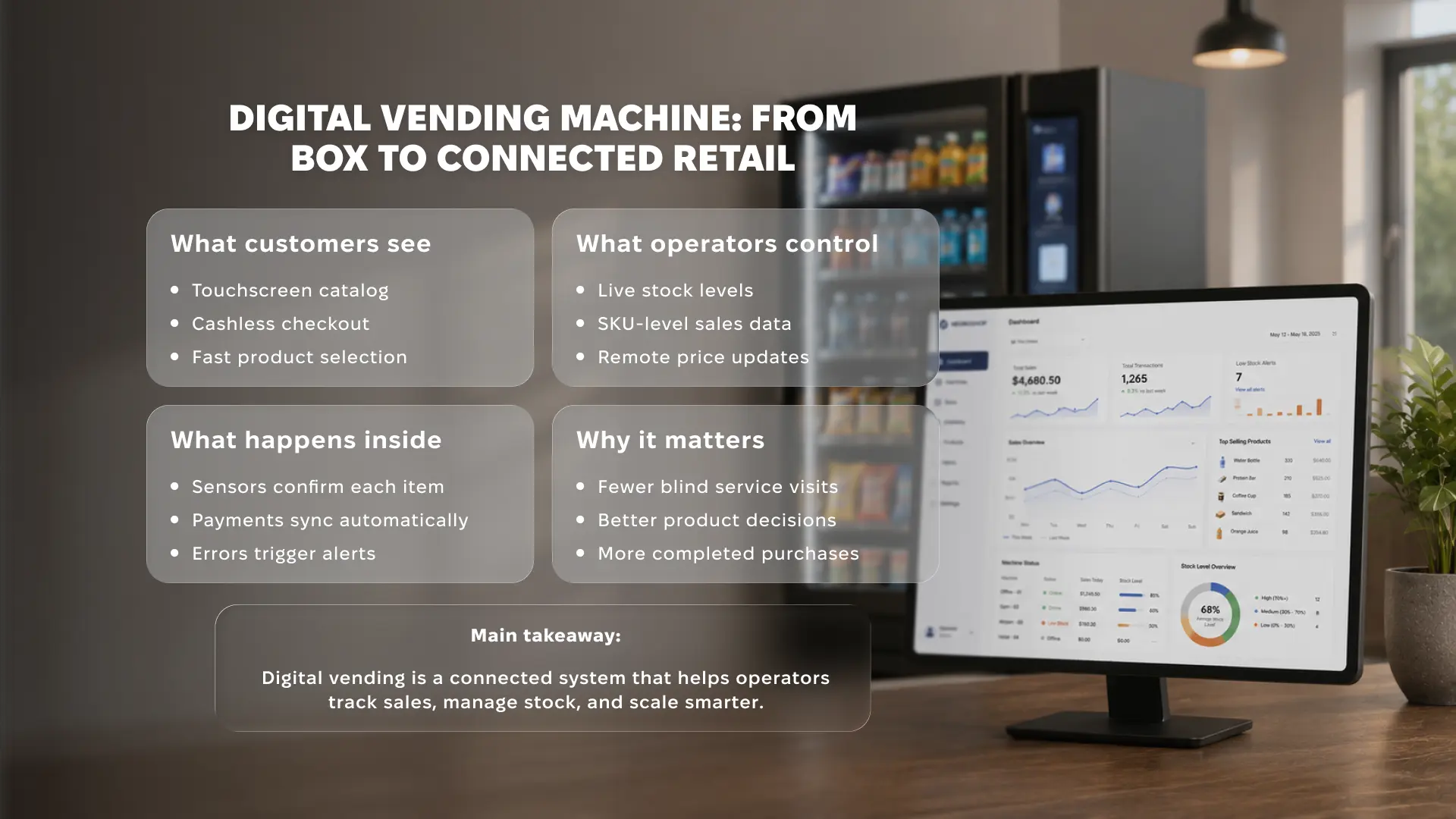
A digital vending machine is a connected retail unit built around a touchscreen interface, cashless payment, and remote data tracking, rather than a simple mechanical dispenser. Connected, IoT-enabled vending equipment is now growing at nearly 9.8% a year, faster than the vending market overall, according to Mordor Intelligence, as more operators shift from coin-only boxes to software-driven equipment.
The term “digital vending machine” is often used interchangeably with “smart vending machine,” and it applies just as well to smart micromarkets, which extend the same digital foundation to an open-shelf format.
This guide covers what makes a vending machine “digital,” the technology running behind the screen, and why many operators are moving from single digital machines to full digital micromarkets instead.
What Is a Digital Vending Machine?
A digital vending machine replaces the coin slot and mechanical keypad with a connected software layer. Customers browse products on a screen, pay with a card or phone, and the machine logs the transaction and adjusts stock automatically.
The term covers a range of equipment, from a single touchscreen snack machine to a full smart micromarket. What they share is a digital core: connectivity, data collection, and remote management replace the closed, mechanical logic of a coin-operated box.
Core components found in most digital vending machines:
- A touchscreen or digital display showing products, prices, and promotions
- Cashless payment hardware supporting cards, mobile wallets, and QR codes
- Sensors or computer vision confirming what was actually taken
- Cloud-based software tracking sales, stock, and machine status remotely
- Remote update capability for pricing and product listings
How Digital Vending Machine Technology Works
The technology behind the screen does more work than the screen itself.
- The customer browses the digital catalog. Products appear with images, descriptions, and current pricing on the display.
- Payment processes through the built-in terminal. Cards, mobile wallets, and QR codes are typically supported alongside or instead of cash.
- Sensors confirm the item was dispensed correctly. This is what allows automatic refunds without a technician visit.
- The transaction syncs to a cloud dashboard. Operators see sales and stock levels almost immediately.
- The system flags low stock or faults automatically. Alerts route to whoever manages that machine or location.
Digital Vending Machine vs Traditional Vending Machine
The practical gap between the two formats comes down to visibility, flexibility, and how much an operator has to guess.
| Feature | Traditional Vending Machine | Digital Vending Machine |
|---|---|---|
| Payment options | Coins, sometimes bills | Cards, mobile wallets, QR codes, plus coins |
| Product display | Static labels behind glass | Digital screen with images and pricing |
| Stock visibility | Only known on-site | Real-time, from any device |
| Pricing updates | Manual, on-site | Remote, applied instantly |
| Sales data | Manual counting or none | Automatic, broken down by SKU |
| Personalization | None | Product suggestions, promotions, loyalty tie-ins |
Operators managing more than a couple of machines feel this difference quickly. Without a digital layer, growth tends to multiply guesswork rather than revenue.
Operating food vending machines across Europe?
Neuroshop's AI vending machines produce the compliance records inspectors require.
Digital Vending Machines and Digital Micromarkets
A digital vending machine is a connected retail unit in a single cabinet. A digital micromarket, sometimes called a smart micromarket, applies that same digital foundation to an open-shelf format where customers pick up items directly and check out themselves.
Neuroshop’s AI micromarkets use computer vision to track exactly what a customer picks up and bill it automatically at checkout, without barcodes or staffed registers. It’s the same digital logic that powers a single touchscreen machine, scaled up to a full assortment of snacks, drinks, and fresh food.
Why the micromarket format extends digital vending naturally:
- More product variety than a single machine’s slots can hold
- Self-checkout instead of a single-item dispensing mechanism
- The same remote data and stock tracking, applied to a larger footprint
- A retail feel that fits offices, gyms, and residential buildings better than a vending wall
For locations that need refrigeration without the full micromarket footprint, Neuroshop’s fridge vending machines sit between a basic digital snack machine and a complete open-shelf store.
Benefits of Digital Vending for Operators
The case for digital equipment comes down to removing tasks that used to require a physical visit.
- Remote stock visibility. Operators check inventory from a phone instead of driving to the site.
- Faster fault response. A jammed sensor or failed payment terminal gets flagged before a customer complains.
- Data-backed product decisions. SKU-level sales data shows exactly what moves at each location.
- Higher completed transactions. Cashless payment removes the most common reason a customer walks away.
- Centralized pricing control. Promotions apply across a fleet without visiting each machine individually.
For a closer look at turning this data into decisions, see the Neuroshop guide on using vending machine sales data to make business decisions.
Where Digital Vending Machines and Micromarkets Perform Best
Connectivity pays off fastest in locations with enough volume to justify remote monitoring, and enough variety in customer needs to benefit from a bigger digital catalog.
- Office buildings and business parks with limited nearby food options
- Gyms, universities, and coworking spaces with steady daily traffic
- Apartment complexes and residential lobbies wanting a retail feel
- Multi-site operators managing equipment across several cities
New operators evaluating any of these locations should also check local compliance requirements first. The Neuroshop guide to vending machine licensing in Europe covers registration and food rules by country, and the guide on common vending mistakes covers setup errors worth avoiding from day one.
Operating food vending machines across Europe?
Neuroshop's AI vending machines produce the compliance records inspectors require.
Conclusion
A digital vending machine earns its name through the connected software layer behind the screen, not the screen itself. Cashless payment, remote stock tracking, and data-driven pricing turn a simple dispenser into a manageable retail asset. For operators outgrowing a single machine’s format, Neuroshop’s digital micromarkets extend that same technology to a full open-shelf assortment with self-checkout built in.
Frequently Asked Questions
Is a digital vending machine the same as a smart vending machine?
Yes, the terms are largely interchangeable. Both describe machines built around connectivity, cashless payment, and remote data tracking, rather than a simple mechanical dispenser with a coin slot and static keypad.
What’s the difference between a digital vending machine and a digital micromarket?
A digital vending machine is a single connected cabinet, while a digital micromarket applies the same technology to an open-shelf format with self-checkout. Micromarkets typically offer a wider product range and a more retail-like shopping experience.
Do digital vending machines still accept cash?
Many do, alongside cashless options, though some operators choose cashless-only units for high-traffic locations. Checking what a specific site’s customers prefer is worth doing before deciding on payment configuration.
What data does a digital vending machine actually collect?
Typical data includes sales by product and time of day, stock levels, payment method breakdown, and fault or error logs. This feeds into a dashboard so operators can adjust pricing and restocking without visiting the site.
Is upgrading to a digital micromarket worth it for a single location?
It depends on foot traffic and demand for variety. Locations with steady daily visitors and limited nearby food options tend to see the strongest returns from the wider assortment a micromarket allows.

