AI vending machines bring artificial intelligence and computer vision to automated retail. These systems also use real-time data processing to optimize operations. The intelligent technology eliminates jammed coins and incorrect change while preventing stuck products. Customers scan their payment method, grab what they need, then simply walk away. Businesses that adopt this technology gain a competitive edge in convenience-focused markets.
What Is an AI Vending Machine?
An AI vending machine is an automated retail system that uses artificial intelligence and computer vision to recognize products and process payments. It requires no manual input from customers.
This technology combines advanced components to automate retail transactions. Traditional vending machines rely on mechanical buttons and coin slots. Smart systems use artificial intelligence to recognize products and track inventory. They also process payments without manual input from shoppers.
Product identification separates old from new. Traditional vending machines use mechanical spirals that require manual selection, while AI vending machines use computer vision and sensors to detect which products customers take. These systems handle any size or shape of product.
How AI Vending Machines Work
Shopping with vending machines using AI takes seconds:
- Authentication – Customer identifies themselves with a bank card, QR code, employee badge, or mobile wallet
- Access – The AI digital vending machine unlocks automatically
- Selection – Customer browses and takes products from open shelves
- Checkout – Customer closes the door
- Payment – System charges automatically for items taken
Transactions finish in 10-15 seconds compared to 30-45 seconds for traditional mechanical vending machines.
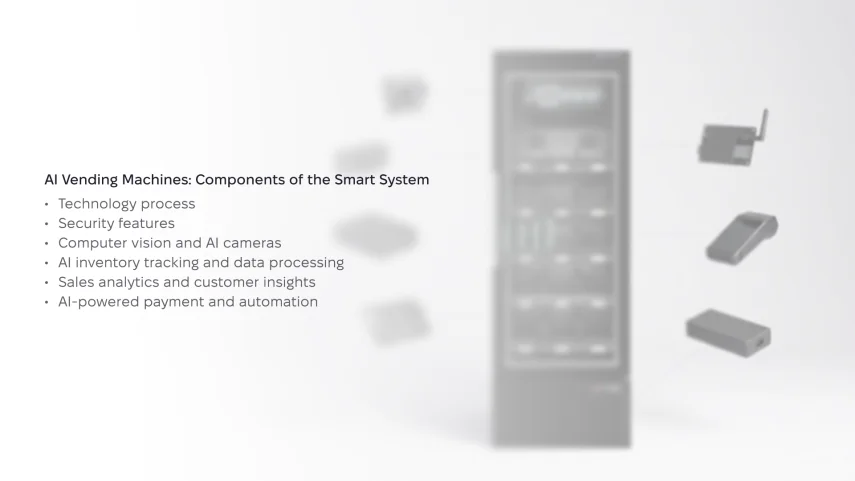
Technology Process
The AI camera vending machine system activates when the door opens, tracking hand movements and product selections through visual recognition. Weight sensors, RFID tags, and shelf position tracking provide additional data.
Payment processing happens automatically after the customer closes the door. The system tallies removed items, calculates the total, then processes payment through the pre-authorized method and sends a digital receipt. Meanwhile, the system updates inventory records in the cloud. The best AI vending machine systems finish this process in under three seconds.
Modern vending for forward-thinking businesses
Neuroshop's intelligent vending machines increase revenue while cutting operational costs
Security Features
AI powered vending machines include strong security measures:
- Real-time monitoring through cameras that record all shopping sessions
- Automatic alerts for unusual activity patterns
- Weight verification that stops unauthorized product removal
- Access control requiring authentication to open machines
- Cloud backup for all transaction data
These features reduce theft and shrinkage compared to traditional vending or honor-system retail. The AI vending machine cost includes security capabilities that prove especially valuable in high-traffic or unsupervised locations.
Computer Vision and AI Cameras
Computer vision technology transforms product recognition from mechanical to intelligent. Multiple cameras positioned strategically inside the AI based vending machine capture complete visual data. They use overhead and shelf-level angles while wide-angle perspectives provide additional coverage.
Machine learning algorithms process visual feeds in real time, comparing what they see against a database of known products. The system then identifies items based on visual characteristics and brand logos. It also uses label text and contextual position for verification. This approach eliminates the need for barcodes or special product preparation.
Computer vision delivers benefits that mechanical systems cannot match. Traditional vending machines require products to fit specific slots. AI digital vending machines accept any product regardless of size, shape, packaging, or fragility. This flexibility transforms the AI vending machine business model by enabling diverse product categories. Operators place products on shelves and the system recognizes new items automatically.
AI Inventory Tracking and Data Processing
Real-time inventory management changes how operators run their vending businesses. Traditional operators rely on physical inspection to know when machines need restocking, which creates wasted trips or empty machines. The new AI vending machine approach solves these problems through constant connectivity. This AI vending machine finance capability helps businesses optimize inventory investment and reduce waste.
Operators access cloud-based platforms showing current stock levels for every product. The platforms also display sales velocity, estimated restock timing, out-of-stock alerts, and trending products. Besides this, the system analyzes historical data to predict optimal restocking times while providing dynamic recommendations instead of fixed weekly routes.
Sales Analytics and Customer Insights
Data from vending machines with AI shows patterns that help operators maximize profitability. Every vending machine with AI capabilities generates actionable insights:
- Peak purchasing times – Morning rush and lunch peaks, plus afternoon energy needs
- Product performance – Top sellers by volume and highest profit margins, plus identification of slow-moving items
- Customer behavior – Common product combinations and average transaction values, plus return frequency tracking
Operators use this data to make better decisions about product selection and pricing. It also informs machine placement strategies.
AI-Powered Payment and Automation
Payment processing represents another area where AI vending machines outperform traditional systems. The AI vending machine price includes payment infrastructure supporting contactless cards and mobile wallets. It also supports QR codes, RFID badges, and biometric options in advanced models.
Payment processing happens automatically. When customers authenticate, the system places a temporary hold on their payment method. After shopping, payment processes within 2-3 seconds and digital receipts send to the customer’s device immediately. The payment experience requires no additional action beyond initial authentication.
Workplace installations often integrate with company benefits programs, including payroll deduction and meal stipends. These integrations make AI based vending machines particularly attractive for office environments.
The Future of AI-Powered Retail Automation
AI vending machine technology keeps advancing. Future systems will recognize individual customers and customize experiences by remembering previous purchases. They will also highlight products matching dietary preferences and offer personalized promotions. Voice-activated interfaces and nutritional information integration are becoming more common.
Environmental concerns drive innovation in AI powered vending machines. Modern systems use LED lighting that consumes 75% less energy than traditional options while variable-speed compressors adjust cooling based on temperature. Sleep modes activate during low-traffic periods. Beyond that, intelligent inventory management reduces waste through expiration tracking and data-driven stocking. Dynamic pricing also moves products before they expire.
Traditional retail locations face pressure to adapt. Frozen vending machines now offer ice cream, frozen meals, and other temperature-sensitive products. What’s more, computer vision technology enables accurate tracking even for items that look similar or change appearance slightly during storage.
Implementing AI Vending Solutions
Businesses considering AI vending machines should evaluate several factors. Location quality matters more than equipment features since high-traffic areas with limited alternatives generate the best returns. Product selection must match the specific audience at each location.
Neuroshop’s computer vision technology enables precise product recognition and real-time inventory tracking. The platform provides detailed analytics that help operators optimize their business while remote monitoring capabilities reduce the need for physical inspections and allow faster response to issues.
Integration with existing business systems creates additional value. Payment systems can connect to corporate accounts while inventory management syncs with ordering systems. Sales data can feed into business intelligence platforms for deeper analysis.
Contact us today, or leave a request on the website to get advice from our specialists. We can discuss individual business solutions from Neuroshop.
FAQ
What are AI vending machines?
AI vending machines are automated retail systems that use artificial intelligence and computer vision to identify products automatically. They track inventory in real time while processing cashless payments. These systems provide shopping experiences without mechanical dispensers or manual product selection.
How profitable is owning a vending machine?
AI vending machines generate higher profits than traditional systems through faster transactions and reduced downtime. Better inventory management and premium product capabilities also contribute. Profit margins typically range from 20-35%, with profitability depending on location quality, product selection, and operational efficiency.
Are AI vending machines worth it?
AI vending machines justify their higher upfront cost through reduced labor expenses and real-time inventory optimization. They also provide theft prevention, better customer experience, and valuable sales analytics. The technology pays for itself through operational savings and increased revenue over the machine’s lifetime.
How does AI camera vending technology work?
AI camera vending technology uses multiple high-resolution cameras and computer vision algorithms to recognize products as customers select them. The system tracks items visually while confirming removals through weight sensors. It then processes automatic payments and updates inventory in real time without requiring barcodes or manual input.
What is the difference between smart and AI vending machines?
Smart vending machines offer basic digital features such as cashless payment and remote monitoring. AI vending machines use artificial intelligence and machine learning for autonomous product recognition. They also employ computer vision for predictive analytics and inventory management that improves through ongoing operation.

