The global beverage vending machine market will reach $8.2 billion by 2028, growing at 6.8% annually. Smart technology is transforming how consumers access drinks on-demand. What started as mechanical coin-operated machines has evolved into AI-powered systems with personalized recommendations, contactless payments, and real-time inventory management.
This guide explores beverage vending technology from its mechanical origins to today’s intelligent systems. You’ll see how Neuroshop’s AI micromarkets lead this transformation.
The History of Beverage Vending: From Mechanical to Digital
Beverage vending has transformed from simple dispensers into sophisticated retail platforms. Each era brought innovations that addressed consumer needs while improving operational efficiency.
The Mechanical Era (1888-1980s)
The first beverage vending machines relied on mechanical engineering. Gravity, levers, and rotating dispensers delivered products to customers.
Here are the key milestones:
- 1888: First coin-operated water dispenser appeared in London
- 1920s: Automatic soft drink machines introduced in the United States
- 1937: First soda vending machines dispensed pre-mixed drinks
- 1950s-1960s: Glass bottle vendors became widespread in factories and offices
- 1970s: Can vending technology replaced bottle systems
Customers inserted coins, pressed buttons that released mechanical latches, and products dropped through gravity-fed channels. Operators spent hours on manual coin collection and counting. Product variety stayed restricted to 6-12 selections maximum. No inventory tracking existed beyond visual inspection.
The Electronic Revolution (1980s-2000s)
Electronic components transformed beverage vending from purely mechanical systems into programmable machines with digital interfaces. Bill acceptors expanded payment beyond coins. Digital displays replaced mechanical price indicators. Electronic refrigeration controls improved energy efficiency and temperature consistency. Programmable logic controllers enabled complex vending logic. Credit card readers introduced in the late 1990s marked the beginning of cashless payments.
These advances reduced mechanical failures substantially. Payment flexibility improved as machines accepted multiple denominations and card payments. However, the customer experience remained unchanged. Customers still pressed buttons and waited for mechanical dispensers.
The Connected Era (2000s-2015)
Internet connectivity revolutionized how beverage vending machines operated. Wireless connectivity enabled remote monitoring of machine status, sales, and inventory. Cashless payment systems supporting credit cards became standard. Telemetry systems provided real-time sales data and equipment diagnostics.
The business impact was substantial:
- Operators gained visibility without physical site visits
- Service improved through remote problem identification
- Data analysis replaced guesswork in product selection
- Operational costs dropped through optimized delivery routes
Current Innovations In Beverage Vending
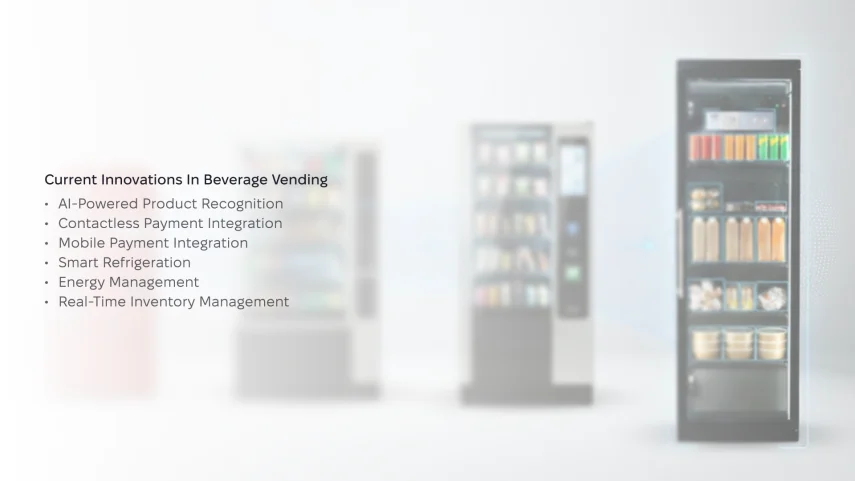
Modern systems integrate artificial intelligence, computer vision, and IoT sensors to create intelligent retail experiences.
AI-Powered Product Recognition
Artificial intelligence eliminates the need for mechanical dispensers through visual product identification. Computer vision cameras capture images from multiple angles inside refrigerated compartments. Neural networks identify beverages by packaging, shape, color, and label characteristics. Automatic billing processes when customers take products and close the door.
Modern systems achieve over 99% recognition accuracy through triple verification. AI neuro vision technology combines visual recognition with RFID tags and weight sensors. If one verification method faces challenges, two others provide validation.
The customer experience feels natural. Customers open the door and browse freely. They examine nutrition labels and compare options. Transactions complete in 15-20 seconds without scanning or button pressing. Multiple beverages can be purchased simultaneously.
Contactless & Mobile Payment Integration
Payment friction has been eliminated through seamless integration of mobile wallets and NFC technology. Modern beverage vending machines accept virtually any payment method customers prefer.
Available payment options include mobile wallets like Apple Pay and Google Pay, contactless cards processing transactions in under 2 seconds, and QR code payments through banking apps. Biometric authentication and account-based systems serve specific markets.
Faster transactions mean machines serve more customers during peak periods. Reduced cash handling costs eliminate security risks and labor. Better data collection on purchasing patterns enables optimization that was impossible with cash-only systems.
Smart Refrigeration & Energy Management
Advanced cooling systems optimize energy consumption while maintaining perfect beverage temperatures. Multi-zone temperature control accommodates different beverage categories within the same unit. Predictive cooling algorithms adjust compressor operation based on usage patterns. Energy-efficient compressors reduce consumption by 40% versus older models. Remote temperature monitoring prevents spoilage before problems occur.
Lower energy costs improve profitability, particularly for operators managing multiple locations. Improved product quality through consistent temperatures enhances customer satisfaction.
Real-Time Inventory Management
Modern beverage vending systems know exactly what’s inside them at all times. Automatic inventory deduction happens when beverages are purchased. Low-stock alerts notify operators before items run out. Predictive restocking forecasts demand based on historical patterns, weather, and events. Cloud dashboards show inventory across multiple locations simultaneously.
Operational benefits compound quickly:
- Optimized delivery routes reduce fuel costs and driver time
- Reduced waste from expired products improves margins
- Elimination of stockouts captures sales that would otherwise be lost
- Better cash flow management through data-driven purchasing
Smart beverage vending starts here Neuroshop AI micromarkets combine vision recognition, contactless payments, and real-time inventory for maximum profitability.
Emerging Trends Shaping the Future of Beverage Vending
Several trends are actively reshaping how people access drinks in automated retail environments.
Sustainability & Eco-Friendly Operations
Environmental concerns are driving beverage vending toward greener technologies. Reusable container programs with deposit and return systems reduce single-use packaging. Biodegradable packaging options minimize plastic waste. Water refill stations integrated with beverage vending reduce bottled water consumption. Recycling integration with built-in sorting makes proper disposal effortless.
Consumer preference for sustainable brands influences daily purchasing decisions. Corporate ESG commitments require measurable environmental improvements. Cost savings from energy efficiency improve profitability while supporting sustainability goals.
Health-Conscious Product Offerings
Consumer wellness priorities are transforming beverage vending from sugar-focused selections to diverse, health-oriented options. Functional beverages offer specific health benefits like immunity support or mental focus. Low-sugar and zero-calorie alternatives capture health-conscious consumers. Plant-based milk options accommodate dietary preferences. Vitamin-enhanced waters and electrolyte drinks support active lifestyles.
Digital displays show calorie counts, sugar content, and complete ingredient lists. Some advanced systems highlight products matching specific dietary preferences like keto or vegan diets.
Micro Market Expansion
Traditional beverage vending machines are evolving into comprehensive AI micromarkets offering extensive drink selections alongside food and convenience items. Micro markets offer 300-500+ SKU capacity versus 30-50 in traditional machines. Open shopping experiences feel more like small stores. Multiple refrigeration zones accommodate different beverage temperatures simultaneously.
Micro market installations grew 30% in 2024. Operators report 3-4x higher revenue per location compared to traditional beverage vending machines. Customer satisfaction scores consistently exceed traditional vending by significant margins.
Customization & Made-to-Order Beverages
The next frontier involves machines that create customized drinks on-demand. Mix-and-match dispensers combine flavors, sweetness levels, and carbonation for infinite variety. Coffee customization with precise milk ratios satisfies particular preferences. Smoothie blending stations with fresh ingredient combinations create healthy options on demand.
Infinite variety overcomes the limitation of fixed selections. Perceived freshness from made-to-order preparation commands premium pricing. The experience of watching beverages created in real-time adds entertainment value.
Understanding how AI vending machines work reveals the technology making these innovations possible.
Why Neuroshop Leads Beverage Vending Innovation
Neuroshop combines these innovations into integrated AI micromarket solutions. The triple verification system delivers 99.9% accuracy in product recognition. Neural Vision, RFID, and weight sensors work together to eliminate billing disputes while preventing losses. All beverage categories from refrigerated to frozen drinks work in one system.
Real-time cloud monitoring with predictive analytics identifies issues before they impact operations. Self-learning algorithms continuously improve recognition accuracy with every transaction. Modular design adapts to any space or beverage mix.
The technology integration extends to business systems. Accounting platforms receive transaction data automatically. Loyalty programs connect with corporate employee benefits. Building management systems coordinate energy usage and access control.
Operational Excellence
Remote monitoring operates around the clock, identifying issues before they impact customers. Automated restocking alerts optimize delivery schedules based on actual demand. Comprehensive analytics show exactly what sells and when. Multi-location management controls entire networks from single dashboards.
Operators report measurable improvements:
- Service call volume drops by 60% through predictive maintenance
- Restocking efficiency improves by 40% through optimized routes
- Revenue per location increases 30-50% compared to traditional machines
- Customer satisfaction scores consistently exceed 4.5 out of 5
Sustainability Features
Energy-efficient refrigeration reduces consumption by 40% compared to older beverage vending machines. LED lighting systems minimize power usage while improving visibility. Smart power management reduces waste through adaptive cooling. Digital receipts eliminate paper waste while improving record-keeping.
Network-wide energy monitoring identifies optimization opportunities. Carbon footprint reporting supports corporate sustainability goals. Reduced restocking trips through optimized routes lower fuel consumption.
Discover choosing a vending machine provider for detailed evaluation criteria.
Choosing the Right Beverage Vending Solution
Selecting the right beverage vending technology requires evaluating your specific needs. Customer demographics determine product mix and technology requirements. Location type matters since offices, manufacturing facilities, and retail spaces have different needs. Space availability dictates whether compact machines or comprehensive micro markets fit best.
Budget considerations involve comparing purchase, lease, or hybrid financing models. Technology requirements range from basic functionality to advanced AI features. Service needs consider whether self-service operations or full-service support makes more sense.
Operators should evaluate total cost of ownership rather than just purchase price. Lower-cost machines with higher failure rates often cost more over five years. Advanced systems typically generate 30-50% higher sales through better customer experiences.
Finding the best locations for micromarket vending machines maximizes the return on your technology investment.
Ready to modernize beverage vending? Neuroshop delivers turnkey AI micromarkets with complete beverage solutions, from installation to ongoing optimization.
Final Take
Beverage vending has transformed from mechanical coin-operated machines to AI-powered smart systems. Today’s technology delivers instant product recognition, contactless payments, and comprehensive analytics. Transactions complete in under 20 seconds with grab-and-go convenience.
Sustainability initiatives reduce environmental impact while lowering costs. Health-conscious products meet evolving consumer preferences. Customization technology creates unique experiences. Micro market expansion combines beverages with comprehensive food offerings.
Neuroshop’s AI micromarkets combine computer vision, RFID tracking, weight sensors, and cloud-based management into turnkey solutions. Whether you’re placing beverage vending in corporate offices, manufacturing facilities, or hospitals, modern technology adapts to your environment while maximizing profitability.
FAQ
- What’s the difference between traditional and smart beverage vending machines?
Traditional beverage vending uses mechanical buttons and dispensers, requires exact change or card swipes, offers 6-12 selections, and needs manual inventory counts. Smart beverage vending machines use AI recognition and contactless payments, enable grab-and-go shopping, provide 100+ beverage options, and track inventory automatically. Smart systems generate 30-40% higher sales while reducing operational costs.
- How does AI improve beverage vending operations?
AI improves beverage vending through visual product recognition eliminating mechanical failures, predictive inventory preventing stockouts, customer analytics optimizing product mix, and automated maintenance alerts reducing downtime. These capabilities increase sales while cutting operational costs by 25-35%.
- What beverage categories work best in modern vending systems?
Modern beverage vending handles carbonated soft drinks, bottled water and juice, energy drinks, coffee and tea through integrated dispensers, and plant-based milks. Multi-zone refrigeration accommodates different storage requirements simultaneously, from chilled beverages to frozen drinks.
- Are contactless beverage vending systems secure?
Modern contactless beverage vending provides bank-level security through PCI DSS compliance, end-to-end encryption, and tokenization preventing card exposure. Multi-factor authentication and regular security audits protect all transactions. Contactless systems offer better fraud protection than cash.
- How much do smart beverage vending systems cost?
Smart beverage vending systems range from $6,000 for compact units to $20,000+ for comprehensive micro markets. ROI typically occurs within 18-24 months through higher sales, reduced labor, and better inventory management. Leasing options reduce upfront investment to $200-500 monthly.
- Can existing beverage vending machines be upgraded with new technology?
Selective upgrades work for machines under 8-10 years old. This includes retrofitting cashless payment terminals, adding IoT connectivity, and installing basic sensors. However, full AI capabilities require integrated camera systems built into machine design. For older equipment, replacing with modern systems delivers better ROI.

