Ice vending machine prices range from roughly $7,000 for a compact unit to $80,000 or more for a high-capacity, fully automated system. The machine itself is only part of the bill, since installation, water and electricity hookups, and ongoing servicing all add to the real cost of ownership.
This guide breaks down what drives that price range, what operators should budget for beyond the sticker price, and why many European operators are choosing a different equipment category entirely: smart refrigerated vending machines that handle ice, cold drinks, and frozen products from a single connected unit.
What Drives Ice Vending Machine Cost
Three factors explain most of the price spread between a $7,000 unit and an $80,000 one.
- Production and storage capacity. A machine that produces and holds more ice handles peak demand without running dry, which pushes the price up.
- Refrigeration technology. Energy-efficient compressors and modern refrigerants cost more upfront but lower the monthly electricity bill significantly.
- Connectivity and remote monitoring. Telemetry that flags faults or low stock remotely adds cost but cuts wasted service visits.
- Payment hardware. Cashless and contactless payment systems add to the base price compared to coin-only models.
- Installation complexity. Plumbing, drainage, and electrical work vary by site and can add thousands before the machine even turns on.
Ice Vending Machine Price Ranges by Type
Pricing splits fairly cleanly by capacity tier, and matching the tier to expected demand matters more than chasing the cheapest unit available.
| Machine Tier | Typical Price | Daily Output | Best Fit |
|---|---|---|---|
| Compact unit | $7,000–$15,000 | 100–200 kg ice | Convenience stores, small retail |
| Mid-capacity | $15,000–$40,000 | 200–400 kg ice | Gas stations, campgrounds, gyms |
| High-capacity | $40,000–$80,000+ | 400+ kg ice | High-traffic retail, transit hubs |
Operators who underbuy capacity for their traffic level often run out during peak hours, while overbuying ties up cash that could fund a second location instead.
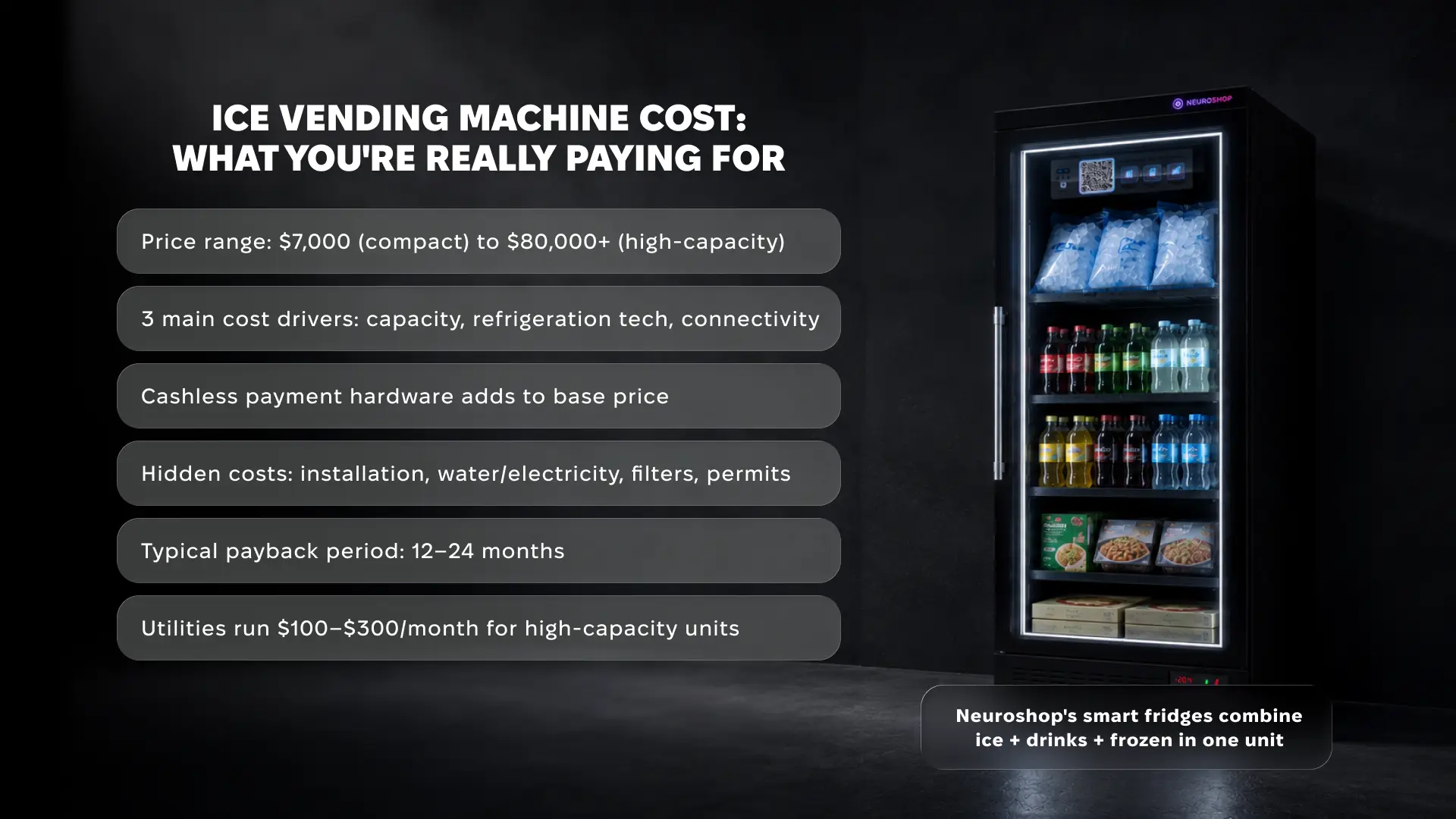
Hidden Costs Beyond the Purchase Price
The purchase price is the headline number, but it’s rarely the full number. A realistic budget accounts for several recurring costs.
- Delivery and installation. Plumbing, drainage, and electrical hookups typically add several hundred to a few thousand dollars depending on site conditions.
- Utilities. Water and electricity for a high-capacity unit can run $100–$300 per month depending on local rates and usage.
- Maintenance and filtration. Filters and routine servicing keep ice quality consistent and prevent costly compressor wear over time.
- Permits and registration. Most jurisdictions require business registration and a food or health permit before a machine can legally operate.
Operators expanding across multiple European countries should check requirements early. The Neuroshop guide to vending machine licensing breaks down registration and food rules by country.
Operating food vending machines across Europe?
Neuroshop's AI vending machines produce the compliance records inspectors require.
Why Many Operators Choose Smart Fridges as Ice Vending Machines Instead
A dedicated bagged-ice machine makes sense for a single high-volume use case, but most European operators need more flexibility from one footprint. This is where Neuroshop’s smart fridges function as ice vending machines in practice, since the same refrigerated cabinet that dispenses cold drinks and ice cream can stock bagged ice alongside them.
Rather than installing a separate ice vending machine and a separate drinks cooler, an operator can run one connected unit that covers all three categories. Neuroshop’s fridge vending machines are built for exactly this kind of mixed cold-product assortment, with the same telemetry and remote monitoring that high-end dedicated ice vending machines charge a premium for.
Why a smart fridge often beats a dedicated ice vending machine for European sites:
- One machine covers ice, cold drinks, and frozen snacks instead of three separate units
- Lower upfront cost than a high-capacity dedicated ice vending machine
- The same telemetry platform tracks stock and faults across the whole fleet, ice included
- Easier to relocate or repurpose if demand at a site shifts toward drinks over ice
Calculating Payback Period for an Ice Vending Machine
Payback period depends on traffic, pricing, and how efficiently the machine operates day to day. A rough framework helps set expectations before committing.
- Estimate daily transactions based on comparable foot traffic at similar sites
- Multiply by your per-unit margin after raw material and utility costs
- Compare monthly revenue against the total cost of ownership, not just the purchase price
- Track actual sales data once installed and adjust pricing or stock accordingly
This last step is where many operators leave money on the table. The Neuroshop guide on vending machine sales data covers how to turn that data into pricing and restocking decisions instead of letting it sit unused.
Choosing the Right Location for an Ice or Cold-Vending Machine
Location quality affects payback period as much as the machine choice itself. A few site characteristics consistently correlate with stronger performance.
- High seasonal demand, such as campgrounds, beaches, or recreational areas
- Limited nearby alternatives for cold drinks, ice, or frozen snacks
- Reliable water and power access without expensive new hookups
- Enough space for restocking and servicing without disrupting other traffic
New operators evaluating their first site should also review common setup mistakes before signing a lease. The Neuroshop guide on common vending mistakes covers the most frequent ones.
Operating food vending machines across Europe?
Neuroshop's AI vending machines produce the compliance records inspectors require.
Conclusion
Ice vending machine prices span a wide range, from roughly $7,000 for a compact unit to $80,000 or more for a high-capacity system, and the purchase price is only one part of the real cost. For many European operators, a smart fridge that handles ice alongside cold drinks and frozen products delivers more flexibility per euro than a single-purpose ice vending machine. Matching equipment to actual site demand remains the decision that affects payback period the most.
Frequently Asked Questions
How much does a small ice vending machine cost?
Compact units typically cost $7,000 to $15,000, suitable for convenience stores or smaller retail sites with moderate ice demand. Capacity and refrigeration efficiency drive most of the price difference within this lower tier of the market.
Are ice vending machines profitable?
Yes, ice typically carries high margins since raw material costs are low relative to the selling price per bag. Profitability depends heavily on location traffic, pricing, and how well capacity matches actual demand at the site.
Can a smart fridge replace a dedicated ice vending machine?
Often, yes, for sites that also want cold drinks or frozen snacks from the same footprint. A multi-product smart fridge typically costs less than a high-capacity dedicated ice vending machine while covering more product categories.
What ongoing costs should I budget beyond the purchase price?
Plan for delivery and installation, monthly water and electricity, routine filter and maintenance costs, and any required permits. These typically add several hundred dollars monthly on top of the initial machine purchase.
How long does an ice vending machine take to pay back its cost?
Payback period varies widely with traffic and pricing, but many operators report 12 to 24 months for well-placed units. Tracking actual sales data after installation helps refine pricing and speed up that timeline.

