Businesses face growing pressure to cut waste, lower energy use, and meet ESG targets. Eco-friendly vending machines answer that pressure directly, combining AI, IoT, and energy-saving hardware to lower operational costs while supporting sustainability goals.
This guide covers what makes a vending machine eco-friendly, how AI reduces food waste, and which smart features deliver the biggest impact on energy consumption and carbon footprint.
What Are Eco-Friendly Vending Machines?
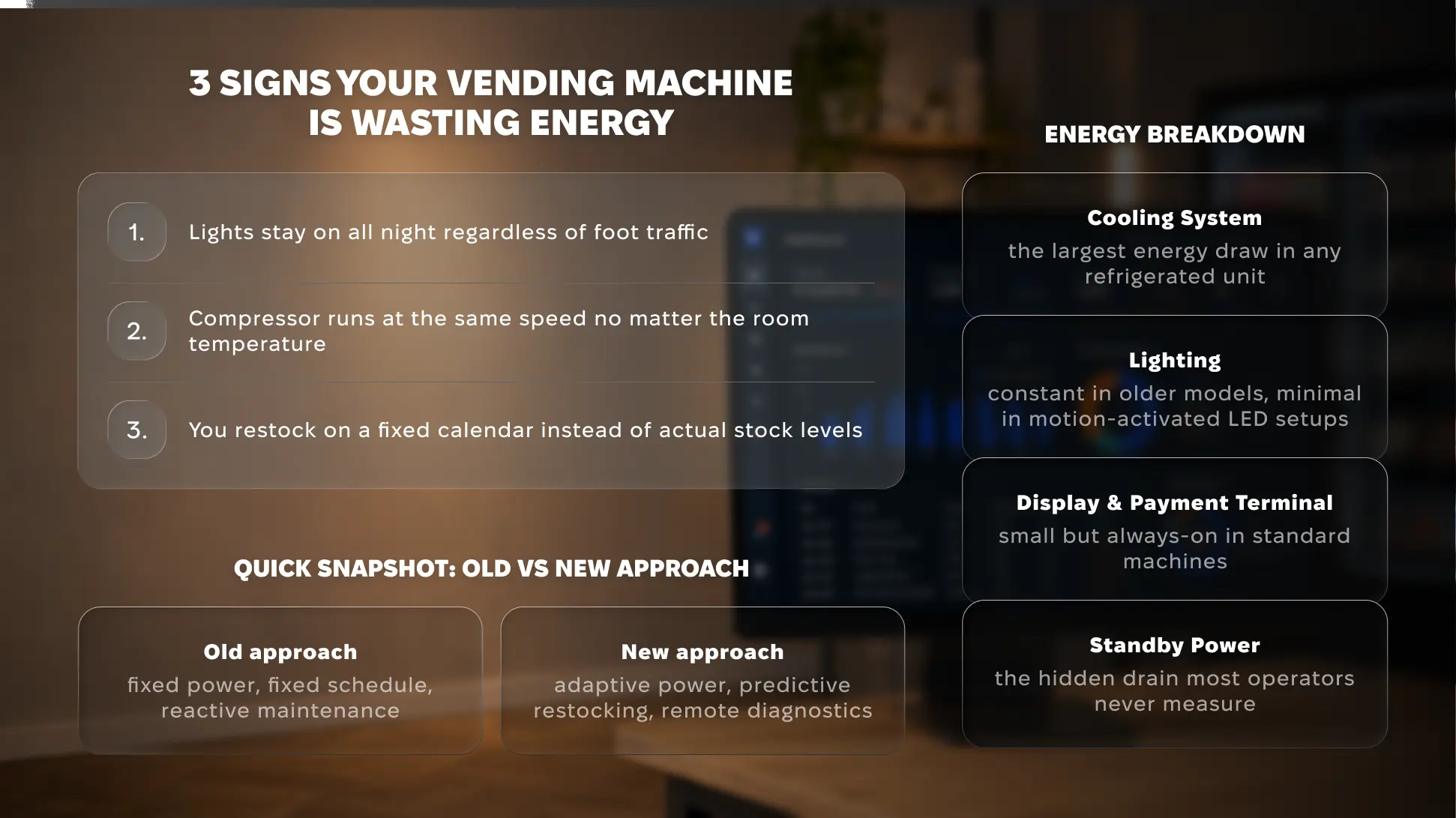
Eco-friendly vending machines are automated retail units built to minimize energy consumption, food waste, and environmental impact. They replace the always-on hardware found in older machines with components that adjust to actual demand.
| Feature | Traditional Vending Machines | Eco-Friendly Vending Machines |
|---|---|---|
| Lighting | Fluorescent, always on | LED, motion-activated |
| Cooling system | Fixed compressor output | Adaptive smart cooling |
| Power mode | Constant, 24/7 | Energy-saving mode during off-peak hours |
| Restocking | Fixed schedule | AI-driven predictive restocking |
| Product sourcing | Standard supply chain | Often includes local sourcing |
Green vending machines built this way consume less electricity per unit sold and generate less product waste than standard models. Neuroshop applies the same demand-based approach across its full lineup of environmentally friendly vending machines, from lighting to restocking logic.
Why Sustainability Matters in Automated Retail
Automated retail runs 24/7, which means even small inefficiencies compound over time. A single traditional vending machine can consume more electricity per year than several household appliances combined, because it never powers down.
For operators, this shows up in three places:
- Higher utility bills from machines that run at full power regardless of demand
- Lost margin from spoiled products that went unnoticed between restocking visits
- Missing data for ESG and sustainability reports that leadership now expects
Sustainable vending solutions address all three at once, which is why adoption is accelerating across retail, healthcare, and corporate environments.
How AI-Powered Vending Machines Reduce Food Waste
AI-powered vending machines track consumption patterns and adjust restocking decisions before waste happens.
- Demand forecasting. Machine learning models analyze historical sales data to predict which products will sell out and which will expire unsold, adjusting future orders accordingly.
- Inventory optimization. Real-time stock tracking flags slow-moving items early, giving operators time to rotate or discount products before they expire.
- Predictive restocking. Smart vending machine technology triggers replenishment based on actual depletion rates instead of fixed schedules, cutting spoilage and unnecessary delivery trips.
These features support food waste reduction at the shelf level and cut the fuel and emissions tied to over-frequent restocking routes. See how Neuroshop’s AI vending machines apply this in practice.
Energy-Efficient Features of Modern Vending Machines
Energy efficient vending machines rely on hardware and software working together.
- LED lighting. LED panels use a fraction of the electricity of fluorescent lighting and last significantly longer, cutting replacement waste too.
- Energy-saving mode. Machines lower cooling and lighting output automatically during off-peak hours, then return to full performance as foot traffic picks up.
- Smart cooling systems. Adaptive compressors adjust refrigeration output based on ambient temperature and product load, avoiding constant maximum-power operation.
- Motion sensors. Displays and lighting activate only when someone approaches, reducing idle energy draw across a full day of operation.
Low energy vending machines built on these principles are standard on Neuroshop’s fridge vending machines, built for operators who need lower running costs without sacrificing product variety.
Ready to lower your fleet's energy and waste costs?
Neuroshop's AI vending machines combine energy-efficient hardware with real-time monitoring.
How Smart Technology Supports Sustainable Retail
Sustainable retail depends on visibility. Operators need remote data to reduce waste and energy use across a fleet of machines.
- Remote monitoring. Cloud dashboards show real-time status across every machine in a fleet, flagging faults before they cause spoilage or downtime.
- Cashless payments. Contactless and mobile payments remove the need for coin mechanisms and receipt paper, reducing physical waste per transaction.
- Real-time inventory tracking. Smart inventory management gives operators exact stock levels remotely, avoiding both overstocking and last-minute emergency restocks that increase fuel use.
- Computer vision. AI vision systems verify purchases accurately, reducing shrinkage and the food waste tied to inaccurate stock counts.
This level of retail automation is covered in more detail in our guide on using vending machine sales data to guide restocking and purchasing decisions.
Eco-Friendly Benefits for Businesses
Sustainability initiatives matter to many organizations, and vending machine sustainability offers a measurable way to support them.
| Benefit | Business Impact |
|---|---|
| Lower operational costs | Reduced energy use and spoilage cut monthly expenses |
| ESG reporting support | Energy and waste data feed directly into sustainability reports |
| Reduced carbon footprint | Fewer emergency restocking trips lower fuel and transport emissions |
| Sustainability initiatives | Visible, trackable step toward public environmental commitments |
Operators expanding a fleet can review compliance requirements in our vending machine licensing guide. Neuroshop’s green technology vending machines generate this ESG data automatically, giving operators ready-to-report numbers without separate tracking tools.
The Future of Sustainable Vending Machines
Vending machines are moving further into AI, IoT, and autonomous retail, with each trend building on the energy and inventory data these machines already collect.
- AI will push demand forecasting further, letting machines adjust power draw based on predicted traffic rather than fixed schedules.
- IoT will connect vending sensors to building-wide energy systems, extending predictive maintenance to catch failing components early.
- Autonomous retail will let vending fleets manage restocking and inventory decisions with minimal manual oversight.
- Green technologies, including low-power refrigerants and recyclable machine components, will extend sustainability into the equipment lifecycle itself.
Conclusion
Eco-friendly vending machines combine energy-efficient hardware, AI-driven inventory management, and remote monitoring to cut costs and reduce environmental impact at the same time.
For operators evaluating new equipment, sustainable vending solutions offer a practical way to lower energy bills, reduce food waste, and support ESG goals without compromising on product variety or customer experience.
Looking to upgrade to energy-efficient vending machines?
See how Neuroshop's smart vending technology reduces waste and running costs.
FAQ
Are eco-friendly vending machines energy efficient? Yes. Eco-friendly vending machines use LED lighting, motion sensors, and smart cooling systems that adjust output based on demand. This combination typically cuts energy consumption significantly compared to older, always-on vending machines with fixed power settings.
How do smart vending machines reduce food waste? Smart vending machines use AI to forecast demand, track inventory in real time, and trigger predictive restocking. This prevents overstocking of perishable items and flags slow-moving products early, reducing food waste before it happens at the shelf level.
Are sustainable vending machines more expensive? Sustainable vending machines often cost more upfront due to advanced hardware and AI features. However, lower energy consumption, reduced food waste, and fewer restocking trips typically offset that cost through lower operational expenses over the machine’s lifespan.
What makes an AI vending machine eco-friendly? An AI vending machine becomes eco-friendly through the combination of energy-saving hardware and intelligent software. Demand forecasting, real-time inventory tracking, and adaptive cooling systems work together to minimize both wasted energy and wasted product.
Can vending machines support ESG initiatives? Yes. Vending machines with energy consumption tracking and waste reduction data give businesses measurable figures for ESG reporting. Operators can show concrete progress on emissions and sustainability initiatives using data collected directly from smart vending fleets.

